14 November, 2026
04:30 PM - 05:30 PM
Aditya Birla Auditorium | On-site
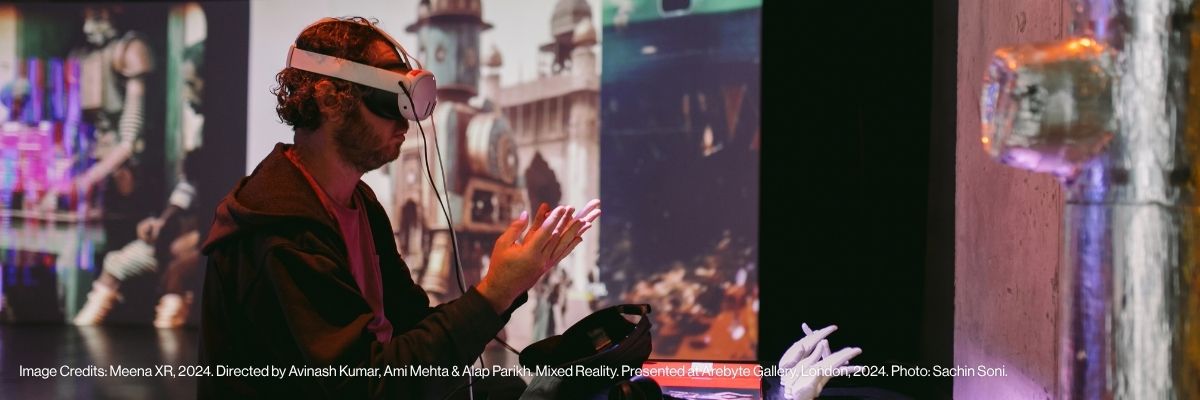
For most of art history, the gallery wall has been a boundary: a surface on which work is displayed, and beyond which the viewer remains separate, observant, and largely unmoved. That relationship is now undergoing a fundamental transformation. Immersive technologies such as virtual and augmented reality, projection mapping, artificial intelligence, spatial computing, and responsive environments are creating new forms of encounter, reaching audiences that may never set foot in a conventional gallery.
Bringing together artists, technologists, curators, and cultural critics, this panel will trace the lineage from early experiments in interactive and new-media art to the digitally responsive ecosystems of today, and consider what these developments mean for artists, collectors, institutions, and audiences. In India and South Asia, the intersection of a rapidly growing art market, expanding digital infrastructure, and an increasingly tech-fluent younger audience is opening up new possibilities for artistic practice, cultural engagement, and creative exchange.
This conversation with a diverse panel of experts will explore: What new possibilities emerge when technology becomes part of the artistic encounter?. How might collaboration with algorithms and new digital tools reshape artistic authorship and creative practice? How can institutions harness these technologies to build more engaging and accessible encounters with art? And how is immersive art transforming cultural spaces, artistic practices, and contemporary culture?
This panel is supported by Avid Learning
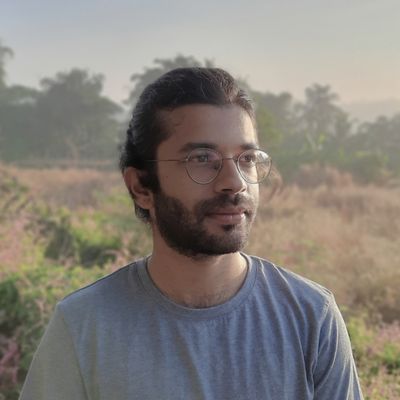
Alap Parikh is an artist and technologist working with novel forms of story-driven immersive experiences. His work investigates how memory, inheritance, ecology and invisible structures affect the meaning we make of our reality. Shaped by both creative intention and emerging technologies, his practice treats participation and interactivity—often their quieter, more deliberate forms—as distinct strategies for provoking thought and introspection. Alap’s work has been presented globally at festivals and museums including the Cannes Film Festival, Sundance Film Festival, the Victoria and Albert Museum, and the Orlando Museum of Art.
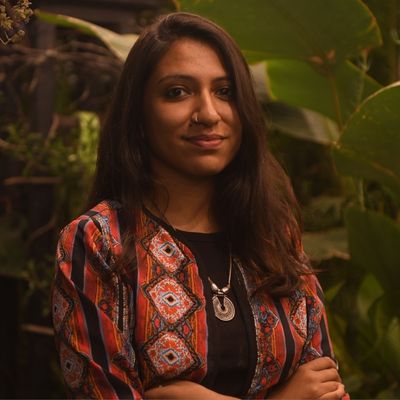
Sonia Parekh is an immersive designer, producer, and field builder working at the intersection of live performance, social impact, and emerging technology. Over the past 14 years, she has moved between the worlds of live production and social impact, developing a practice rooted in the belief that stories can be experienced, inhabited, and felt. She is currently Head at IMMERSE (Storiculture), where she works across ritual, performance, spatial storytelling, and emerging technologies to combine analogue forms of storytelling into new digital and immersive experiences. Her practice explores responsible technology, climate and ecology, gender and identity, and mental health narratives, while drawing from the cultural forms, oral traditions, rituals, and lived realities of the region. Her recent work includes Blood Moon, presented at BLR Hubba, and What Does Loss Taste Like, presented at Serendipity Arts Festival. She is currently producing INSIDE, an XR documentary exploring solitary confinement through the testimony, and drawings of a young person. She has also worked as Impact Producer on the Sundance award-winning documentary Against the Tide, developing its impact strategy, campaign, and public engagement.
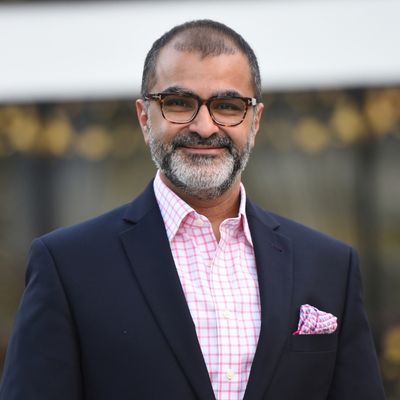
Asad Lalljee is SVP, Essar Group, CEO of Avid Learning, a public programming initiative and creative platform under the Essar Group, and Curator of the Royal Opera House, Mumbai. Before relocating to India, Asad worked for 14 years as one of the ‘Mad Men’ advertising executives on New York's Madison Avenue. Asad has transformed Avid Learning into India’s leading cultural hub through international collaborations and partnerships with some of the country’s biggest cultural platforms. A distinguished member of the FICCI Art and Culture Committee (now the Tourism and Culture Committee) since 2018, Asad has convened multi-stakeholder conferences in Mumbai and Bengaluru to democratise the arts. Since the Royal Opera House's restoration, Asad’s curatorial programming has re-established its reputation as the city’s cultural crown jewel. He also serves on the Kala Ghoda Association’s Executive Committee and is an Executive Committee Member of the Indian National Trust for Art and Cultural Heritage’s (INTACH) Greater Mumbai Chapter for 2026/27. He previously served on the advisory board of the Mumbai Urban Art Festival for 2022–23. In April 2020, Asad pivoted from AVID to AVID ONLINE, presenting 240 programs within a year. An early adopter of technology trends, he takes a special interest in new media, curating programs around AI & the Arts, the latest chapter in AVID’s tech-forward programming, exploring creativity and the future of artistic expression. In 2026, Asad Lalljee joined a global cohort of cultural leaders as a Salzburg Global Fellow. Asad holds a B.A. in Economics from St. Xavier’s College and an M.A. in Global Marketing Communications from Emerson College, Boston.