12 November, 2026
03:30 PM - 04:30 PM
Aditya Birla Auditorium | On-site
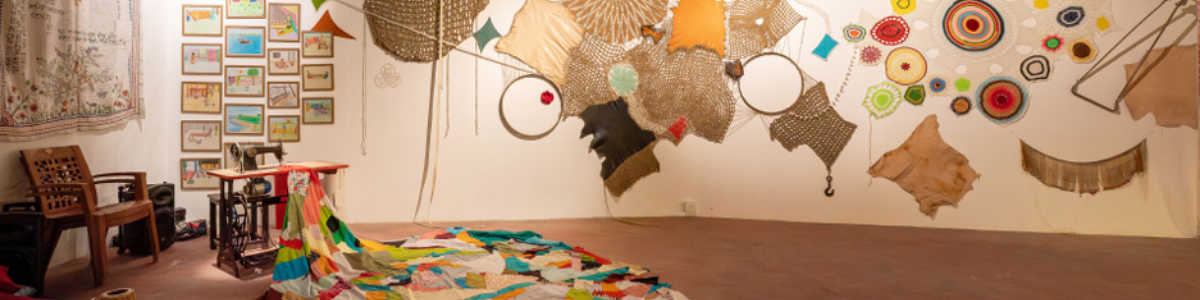
Biennales have become one of the art world's most dynamic institutions - global platforms where artistic exchange, national identity, and cultural ambition meet and generate something genuinely new. Rather than treating this as a contradiction to be resolved, this panel explores it as a productive space: what becomes possible when diplomacy, capital, and artistic vision converge?
Three practitioners will bring distinct vantage points to that question. Jitish Kallat, whose practice and experience directing the Kochi-Muziris Biennale span both sides of the biennale equation, offers a lens on how these platforms can become sites of genuine reckoning, renewal, and connection for communities and histories long overlooked. Kulapat Yantrasast, Artistic Director of the 2027 Bukhara Biennial and an architect of major cultural institutions, speaks to how thoughtful design can turn diplomatic ambition into spaces of real public connection and civic pride. Roobina Karode, Artistic Director and Chief Curator, Kiran Nadar Museum of Art, brings a curator’s view from the museum, but also from a history of extensive participation during multiple Venice Biennale editions and the upcoming Bengal Biennale. She will draw on years of research into South Asian art histories and collaborative curatorial work, to consider how biennales and institutions straddle the inclusion, exclusion and juxtaposition of art and open new itineraries of exchange between regions.
Moderated by Deepanjana Klein, Special Advisor to the Chairperson and Director of Acquisitions and Development, Kiran Nadar Museum of Art, the conversation will move between concrete case studies and forward-looking possibility, asking how biennales might keep evolving — as platforms not just for representation, but for genuine dialogue, care, and imagination across borders.
The ART MUMBAI Speaker Series is presented by the Kiran Nadar Museum of Art
Image courtesy of Kochi-Muziris Biennale
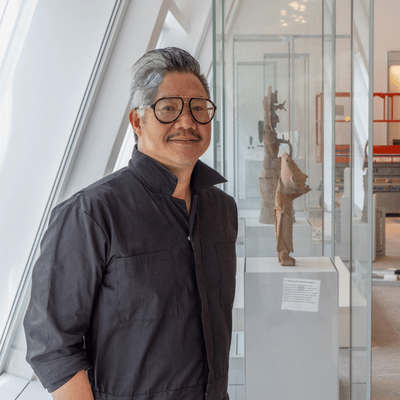
Kulapat Yantrasast is the founder and creative director of WHY Architecture, an internationally recognized practice designing cultural institutions. His work includes The Metropolitan Museum of Art's Michael C. Rockefeller Wing, the Dib Contemporary Art Center in Bangkok, the ilmi Science Discovery & Innovation Center in Riyadh, and the Uzbekistan Art and Culture Development Foundation's pavilion at Milan Design Week 2026. Current work spans the Louvre's new Department of Byzantine and Eastern Christian Art, the Getty Center's Welcome Hall, India's new National Museum in New Delhi — set to be the world's largest — and the Bukhara Biennial 2027, where Yantrasast is Artistic Director. Raised in Bangkok and educated at the University of Tokyo, Yantrasast approaches each project as an act of cultural translation — creating spaces where architecture, memory, and human experience converge. He received Thailand's Silpathorn Award and serves on the boards of the Pulitzer Arts
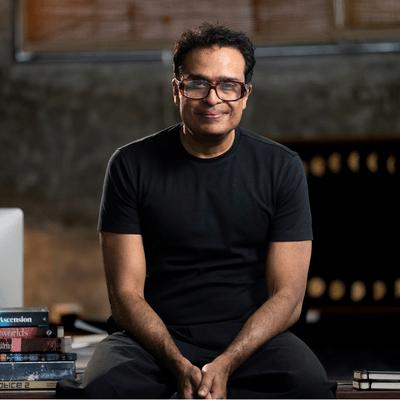
Jitish Kallat’s work probes intersections of science, historical memory, and existential inquiry, reflecting on our planetary presence and place in the cosmos. His multifaceted practice spans drawing, painting, sculpture, photography, and time-based media, often shifting focal lengths between the intimate and the cosmic, the present and the historic. Kallat has presented solo exhibitions at the Art Institute of Chicago, Art Gallery of New South Wales, Philadelphia Museum of Art, and National Gallery of Modern Art, New Delhi. His work has featured in major international biennales, including Venice and Gwangju. Curator and artistic director of the 2014 Kochi-Muziris Biennale, he is currently its president.
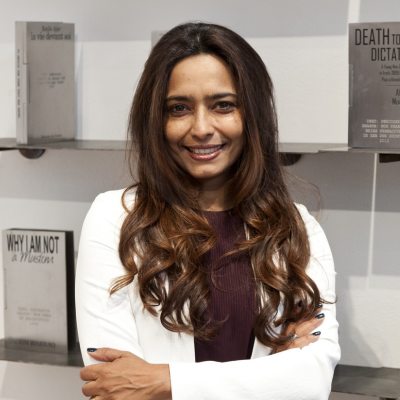
Dr. Deepanjana Klein, after nearly 15 years with Christie's as the International Head of Modern and Contemporary and Classical Indian and Southeast Asian Art, joined the Kiran Nadar Museum of Art as the Director of Acquisitions and Development in 2022. Deepanjana has a PhD in Indian Art History from De Montfort University in England and has taught art history, theory, and aesthetics at the Leicester School of Architecture in England and at the Kamla Raheja Vidyanidhi Institute for Architecture and Environmental Studies in Mumbai. Her publications include contributions to the Encyclopaedia of Sculpture (Fitzroy Dearborn Publishers, 2004), and she regularly writes for various journals on the topic of contemporary Indian art. She is the recipient of several awards, including a grant from the Mellon Foundation (ArtStor) for her photographic documentation of the Ellora cave temples, and has recently published her book on the Ellora caves.