A POET AND A PAINTER
November 13 , 2026
06:00 PM - 07:00 PM
Aditya Birla Auditorium | On-site
What happens when a painter responds to a poem?
Taking its cue from the collaboration between poet Javed Akhtar and painter Baaraan Ijlal, this panel poses questions of how different forms of creative expression can act as translators for one another, bringing forth emotions, ideas, themes, thoughts and notions of belonging, care, community, and resilience in contemporary life.
The conversation turns on this act of translation - what a painter keeps, discards, or invents when a line of verse becomes an image, and what a poem gains when it is read back through a painting. Rather than illustration in the literal sense, the works function as complementary readings, one that follows Akhtar's written idioms and Ijlal’s visual language into the city's homes, migrant routes, and apartment blocks, finding in them aspiration and exhaustion, performance and collapse, with unexpected tenderness.
Moderated by Ranjit Hoskote, the discussion promises to move between craft and collaboration. How two artists working in entirely different mediums arrive at a shared vision, and what such partnerships reveal about the making of meaning across word and image.
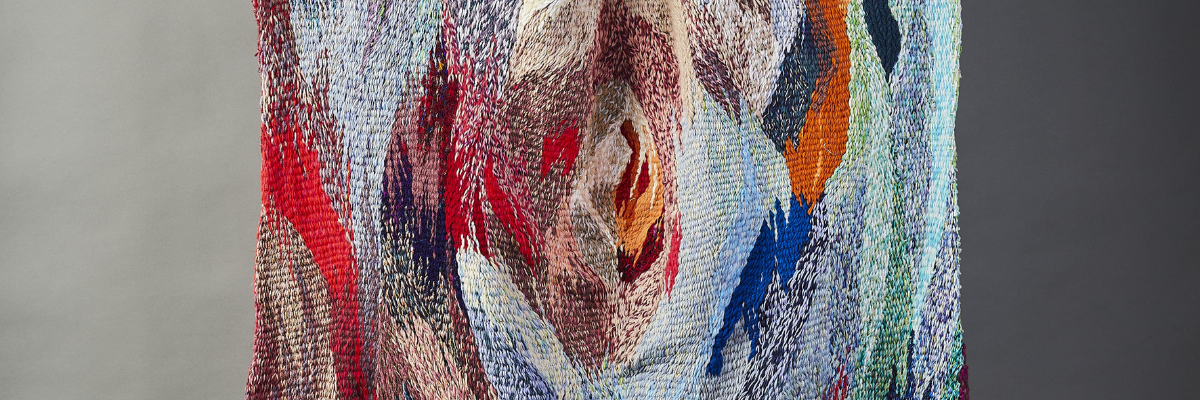
Painting from the series, When No One Moves by Baaraan Ijlal. Image courtesy the artist.
Javed Akhtar is one of India’s most celebrated screenwriters, lyricists, poets, and activists. Through his remarkable body of work, he has shaped the way India speaks, sings, and feels. His debut poetry collection, Tarkash, is the country’s best-selling poetry book in six decades, while his books Talking Films and Talking Songs are widely treasured for their insights into Indian cinema. A Member of Parliament in the Rajya Sabha from 2010 to 2016, Akhtar played a pivotal role in advocating for the Copyright Amendment Bill, which secured royalty rights for writers and composers. He currently serves as the Chairman of the Indian Performing Right Society (IPRS). His numerous honours include the Padma Shri, Padma Bhushan, Sahitya Akademi Award, honorary doctorates from SOAS University of London, Jamia Hamdard University, and other distinguished institutions, an honorary Doctor of Letters from Pondicherry University, and the Dostoevsky Star Award 2025. His poetry has been translated into several languages, including English, French, Italian, Bengali, Marathi, and Kannada. Through his literary achievements, contributions to Indian cinema, and advocacy for artists’ rights, Akhtar continues to be one of India’s most influential and respected public voices.
Baaraan Ijlal is a self-taught artist based in New Delhi, India. Her multidisciplinary practice spans painting, sound, video, photography, embroidery and stone inscriptions, grounded in listening and sustained attention to people, places, language and memory. Her ongoing projects Change Room (2018–) and Hostile Witness (2014–) take shape through questions of anonymity, displacement, memory and erasure. Her works are held by Kiran Nadar Museum of Art, Devi Art Foundation and KADIST, Paris. She has exhibited at Hayy Jameel, Chintretsukan Gallery, Tokyo University of the Arts for SGFA- CRiSAP, CREA ReConference, KHOJ, Arte Laguna, Venice, and CSMVS, Mumbai. She received a KHOJ Peripheries & Crossovers grant and residencies at Sharjah Art Foundation, Conflictorium Museum and Sanskriti Kendra.
Ranjit Hoskote is a poet, translator, cultural theorist and curator. His poetry collections include Vanishing Acts: New & Selected Poems 1985-2005 (Penguin, 2006), Central Time (Penguin, 2014), Jonahwhale (Penguin, 2018; in the UK as The Atlas of Lost Beliefs by Arc, 2020), Hunchprose (Penguin, 2021), and Icelight (Wesleyan University Press, 2023). Hoskote’s acclaimed translations include I, Lalla: The Poems of Lal Ded (Penguin Classics, 2011) and The Homeland’s an Ocean: Mir Taqi Mir (Penguin Classics, 2024). He has authored a book of essays on the painter Gieve Patel, To Break and To Branch (Seagull, 2024) and is co-editor of an international transdisciplinary anthology on the climate crisis, Practices of Hope: A Reader for the Future (Niyogi/ Goethe-Institut Mumbai, 2026). Hoskote curated India’s first-ever national pavilion at the Venice Biennale (2011) and was co-curator, with Okwui Enwezor and Hyunjin Kin, of the 7th Gwangju Biennale (2008). He served on the jury of the 56th Venice Biennale (2015), was a curatorial advisor to the 59th Venice Biennale (2022), and participated in the Venice Biennale of Architecture (2023). He is a founding member of the Advisory Board of the Bergen Assembly, a visual arts triennial in Norway. In January 2027, he will curate the inaugural edition of SITE Jodhpur, a biennale-scale platform for public art.
Across the Middle East, South Asia, and Southeast Asia, new museums, foundations, and cultural...
This book launch, at ART MUMBAI, presents My Tyebi, a memoir of love, art and a life lived beside...
What happens when a painter responds to a poem?Taking its cue from the collaboration between poet...
A collector can own a painting and still not own the right to reproduce it. Under Indian law,...
ART MUMBAI is thrilled to bring to the stage the ‘terror twins of Funk and Swing’, Madboy /...
For much of the twentieth century, the story of folk and tribal art in Indian modernism was told as...

Tyeb Mehta (1925–2009), emerged as one of India’s leading modernists. Trained at the Sir J. J....
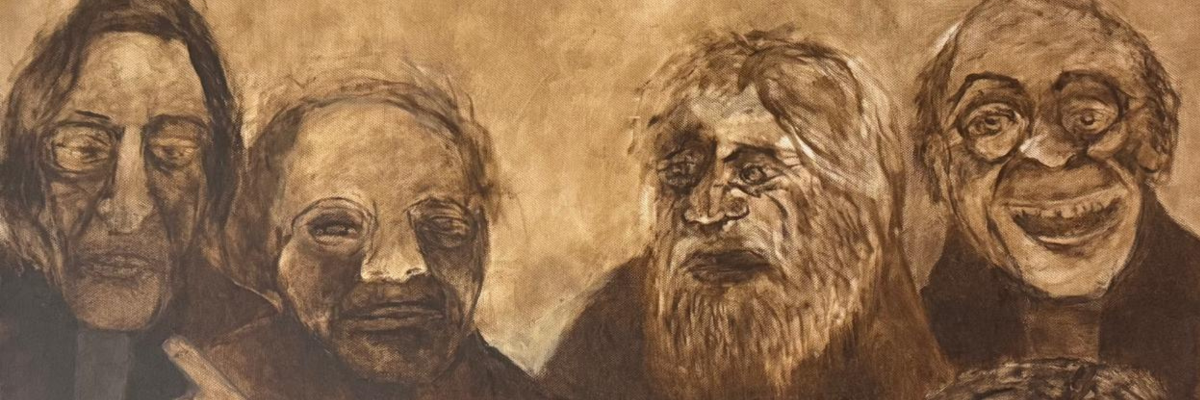
This panel discussion will explore the plurality in Krishen Khanna’s work and relook at his work...
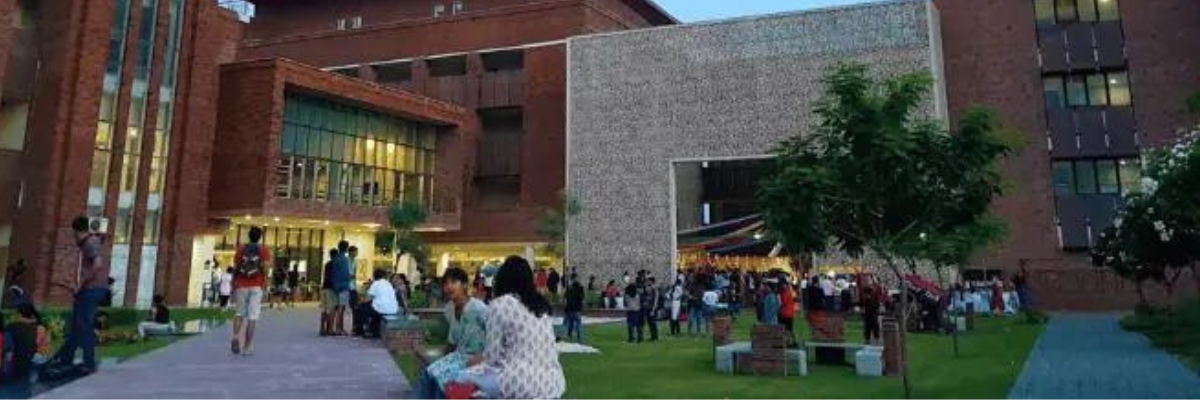
This panel will examine how Asian patronage is reshaping global art and cultural narratives,...
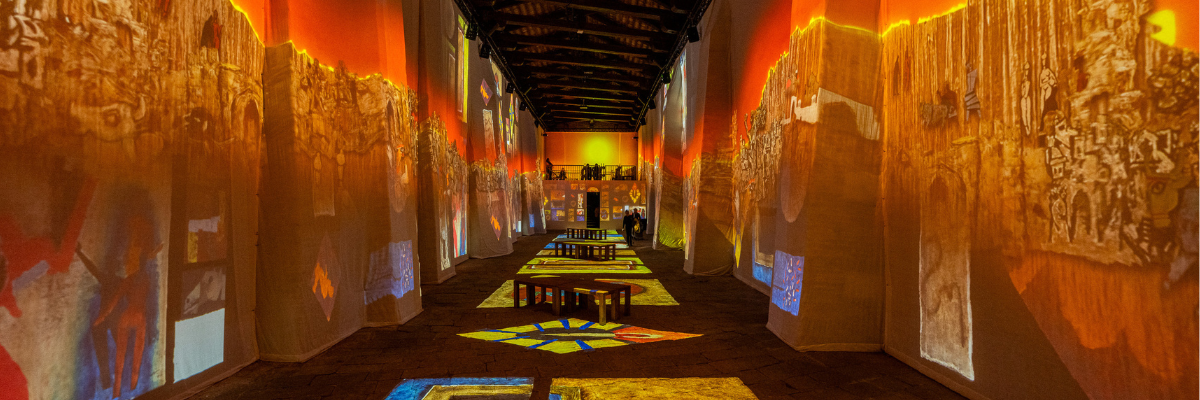
The panel will explore the journeys of two patrons who are playing pivotal roles in reshaping and...
An interactive tapestry weaving ‘artist in me workshop’ inspired by Tyeb Mehta’s iconic...

Guided walks through ART MUMBAI by Art and Wonderment Walk timings: Friday, November 14, 2025...
Guided walks through ART MUMBAI by Art and Wonderment Walk timings: Friday, November 14, 2025...
Guided walks through ART MUMBAI by Art and Wonderment Walk timings: Friday, November 14, 2025...